by Wonder Worman | Feb 13, 2013 | Less in the Landfill, Red Wiggler World
 Reading comments from a group of enthusiastic students was an amazing treat! While at my day job, I checked my phone to find 10 plus comments from, what I’d like to call, “The Future Vermicomposters of Our Amazing Planet”! Way to go young ones! Thanks for getting my Wonder Worman brain in action. It has been a while since I have blogged and am so happy to be inspired by young, earth loving minds!
These young ones must have an amazing teacher! Each comment began with a positive statement and ended with a well, thought out question! What a great way to make someone feel heard and an even better way to get a quick reply. Well done! Some of the questions were precious, “Who is Max and Carlos?” “Is Carlos your Hubers?” (thanks for that question! I will forever refer to Carlos as my hubers!) Some were thought provoking, “Why did you start composting with worms?” “How did you feel the first time you watched the Earth video?”
I happily replied to each of the questions and thanked them for their comments! I really don’t know too much about the school and it’s philosophy, but I do know they compost in the classroom and have a group of young ones who care a bunch for our planet! Way to go!
Keep on wormin’
WW
by Wonder Worman | Jan 24, 2011 | Red Wiggler World
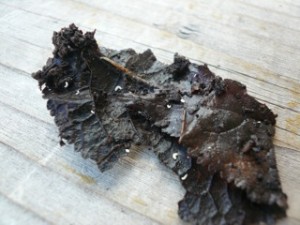 See the white specks on the decomposing leaf? They are mites. Mites are part of the decomposition cycle and are also members of a worm bin, too. They will not harm the Red Wigglers as long as there isn’t an explosion in their population. Mites feed on decaying matter and are usually found on the surface but may go deeper depending on where the food is located.
Cause: Typically an explosion is a result of too much food and possibly too much moisture. This usually occurs on the surface where the food scraps are placed. If there is an explosion in the mite population, the Red Wigglers will avoid the food and move to another area in the bin. I usually see an explosion of mites when I put in too many cantaloupe rinds. The Red Wigglers can’t handle the amount of scraps and the mites take over. If that happens, then the Red Wigglers will not be able to get the food and may starve.
Treatment: If there are too many mites in your bin, then you’ll want to make some changes. I suggest doing one or maybe all of these ideas.
1) Remove the food source where the explosion is occurring. Usually it will be covered in mites to the point where you can barely see the food. I would toss it into your yard or bury it.
2) Remove the top few inches of bedding. Sometimes the mites are covering the top of the bedding.
3) Leave the bin open and expose it to light. This will help dry out the surface. Mites do not like a dry area. The sun light will also help to control the mite’s population.
4) Add some dry newspaper to absorb the excess moisture.
5) Stop feeding for a week. Freeze any food scraps that you are producing in the meantime.
Happy Wormin’
by Wonder Worman | Jan 18, 2011 | Red Wiggler World
-
-
A fruit fly has red eyes and it’s body is a yellow orange color.
-
-
Adult fungus gnat is black and smaller than a fruit fly
Both the fruit fly and fungus gnat are rather annoying to me, and unfortunately they are part of the composting system. They are attracted to decomposing and rotting food. So if you are composting with or without worms, you are going to attract these creatures. The upside to these winged creatures is their short life span. Many sites claim they live for a day to a week depending on the temperature and the availability of food. They do reproduce quickly if food is around for them to feast on so it may seem that they live forever. Also, the warmer the weather, the longer the life span and the more they reproduce. The opposite is true for the cooler weather.
Sign: The mantra buzzing around is “Everything in moderation”. This is true for the fruit fly and fungus gnat. You don’t want a herd of these creatures. For example, if you were to open the bin and a swarm rushes out to you and tries to get up your nose and in your mouth, then things need to change in the bin. They are just giving you a sign that you are producing more food scraps than the wigglers can handle. So the decomposing food is very appealing to the wigged creatures, and they will begin to lay their eggs in the food and the wet bedding. A swarm like this will deter your wigglers from coming to the surface to feed on the food scraps.
Solution: There are a few things you can do to rid yourself of a majority of these guys. Once again a few won’t harm your wigglers. and are actually speeding up the composting process. They are more of a nuisance to us, but if you have a swarm try one or all of these methods.
– stop feeding for a week or until the wigglers consume what is left in the bin. In the meantime, the scraps that you are producing can be stored in the freezer.
– burry the food scraps in the bedding so the flies can’t get to them.
– cover the bedding with extra sheets of newspaper.
– add some peat moss, or shredded paper to absorb any extra moisture.
– put the bin outside, over night ,exposed to cooler temperatures.
– buy fly paper
– put some fruit juice with a bit of soap in a bottle. The flies will go in and die….so sorry
Happy wormin’
Here’s where I got some info on the fruit fly and the fungus gnat.
by Wonder Worman | Nov 16, 2010 | Less in the Landfill, Red Wiggler World, Sidetracks
Listen to this post!
-

-
Stalk Market provides compostable tableware made with Ingeo
-

-
Elements Naturals makes compostable baby wipes with Ingeo
-

-
Jillson and Roberts uses compostable packing made with Ingeo.
Ingeo (pronounced in-gee-o) keeps popping up in my life and so unexpectedly! I’ve developed an interesting relationship with this silly word but great product!
Ingeo was first introduced to me over the summer when I met with Linda, the owner of Elements Naturals. Her compostable baby wipes are made with Ingeo, a plant based product which is 100% compostable. I was very happy to meet Ingeo and was very impressed by it’s capabilities. I also thought “Ooooooh, Ingeo, you are so soft!”
I didn’t run into Ingeo for quite sometime, until I bought a package of SunChips on Monday of last week. I then thought, “OH, Ingeo, you are so LOUD!, but that’s o.k. you’re good for the planet.”
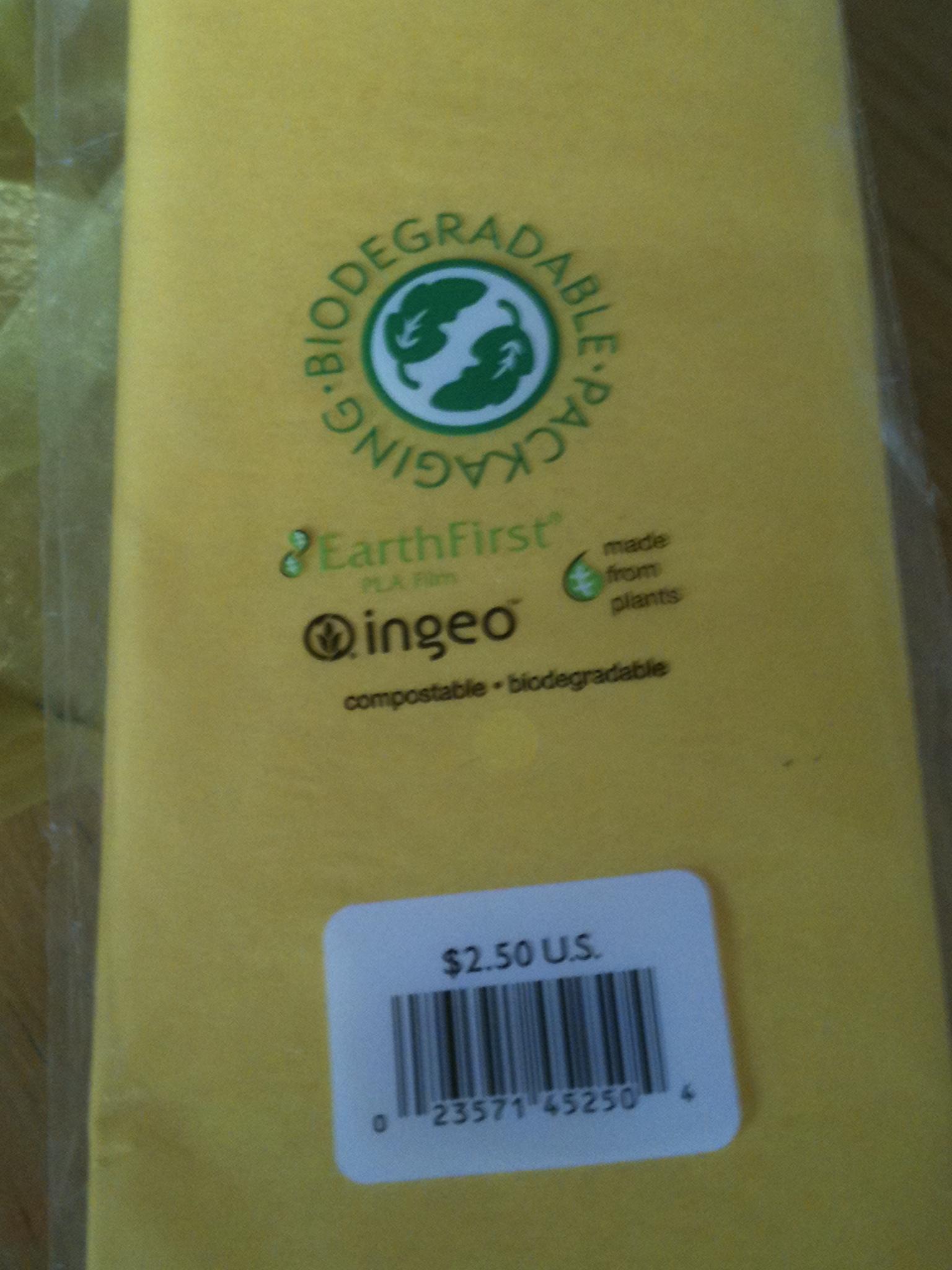
Four days later, while wrapping a present, I started to undress Ingeo! Ingeo was covering my pretty yellow tissue paper. I then said , “ooooooh, Ingeo, you are sooooo smoooth!”
Then today the unspeakable happened! I had my lips on Ingeo!! While sipping a cup of coffee, I noticed the cup and lid were made with Ingeo.
Hmmmm, I am on the hunt for you Ingeo! Where and when will we meet again?! I can’t believe you had me kiss you without even asking! You are one smooooth operator!
If you’d like to learn more about this smooth, soft, sometimes loud but good for the planet product click here! (And to also see if you, too, may have had or still have a relationship with Ingeo?!)
I am in the process of vermicomposting the SunChips bag, some baby wipes and now the coffe lid and cup! I have to get rid of that evidence!
by Wonder Worman | Nov 12, 2010 | Less in the Landfill, Out and About, Red Wiggler World
Hi,
I am so excited to begin my composting experiment with the compostable bag! Thanks for creating this product. I am promoting the bag and really don’t care about the noise. I understand Frito Lay needs to listen to consumers in order for the product to survive, but was upset to see that there was a change back to the plastic bags while research is being conducted. I am the owner of Wonder Worman, a composting service business in Bend, Oregon. I sell Red Wiggler composting worms and worm bins. I also work with the Environmental Center, setting up our local schools with worm bins and composting bins. Please view my blog and web site. I will be updating the blog with the observations of my experiment on a regular basis.
www.wonderworman.com
http://wonderworman.blogspot.com/
Best to the business!
Laurie – Red Wiggler Merchant
Frito-Lay’s response
Hi Laurie,
Thank you for your enthusiastic response on Snack Chat about our SunChips compostable package. I’m not an expert on composting but have been told that the package does not break down as well in vermi-compost, because it is a cold compost method. The ideal compost temperature needed for our package to decompose is 120-140 degrees. To achieve this temperature there are some great suggestions on www.sunchips.com. Your business venture sounds like an exciting one, and certainly needed with the growing sentiment we’ve seen from consumers about being good stewards of our planet. We wish you the very best in your endeavor and thank you again for supporting our earth-friendly initiative.
Happy Thanksgiving!
Best regards,
Linda Phelps
Frito-Lay Consumer Affairs